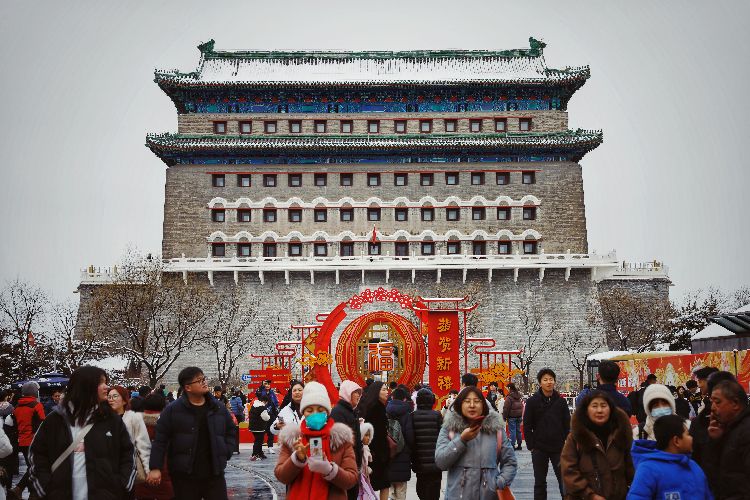
Zhengyangmen Gate
Introduction
Zhengyangmen Gate is a prominent historical and cultural landmark situated on the Beijing Central Axis, one of the most significant urban planning feats in China's history. As one of the most magnificent entrances on the Central Axis, the gate holds a deep connection to Beijing's rich history and cultural heritage. Beyond its architectural grandeur, Zhengyangmen Gate serves as a symbol of the city's evolving narrative, bridging the past and present through its continued relevance in contemporary times.
History
Construction and Architecture
Zhengyangmen Gate, also known as Qianmen, was constructed during the Ming Dynasty z (1368-1644) and has undergone several restorations over the centuries. The gate is a vital component of the Beijing Central Axis, which governs the overall layout of Beijing’s old city. It comprises a gate tower located in the north and an archery tower to the south, making it the largest among all gates of Beijing's inner and outer cities during the Ming and Qing dynasties. Standing at a height of 43.65 meters, Zhengyangmen Gate features intricate architectural designs that reflect the skilled craftsmanship of ancient Chinese builders.
Historical Significance
Historically, Zhengyangmen Gate played a central role in Beijing's urban management and military defense. It was a crucial entry point for the imperial city, where it served as a ceremonial and defensive structure. The area around Zhengyangmen underwent significant changes following the end of the monarchy, reflecting the evolving dynamics of urban development. In the early 20th century, major modifications, including the replacement of the fortified barbican with an urban road, marked the transformation of the area from its imperial roots to modern urban planning.
Cultural Importance
Zhengyangmen Gate is not only an architectural marvel but also a cultural symbol of Beijing’s rich heritage. It embodies the traditional Chinese urban planning philosophy that emphasizes harmony and order. The gate's historical significance is further highlighted by its inclusion in the UNESCO World Heritage List as part of the Beijing Central Axis. It continues to serve as a focal point for cultural events and activities that celebrate Beijing's historical narrative, fostering a sense of continuity and cultural pride among residents and visitors alike.
Preservation and Restoration
Preservation and restoration efforts have been crucial in maintaining the structural integrity and historical essence of Zhengyangmen Gate. Archaeological excavations and architectural studies have been conducted to understand better and preserve the gate's historical context, particularly its connections to the southern section road and other critical components of the Beijing Central Axis. These efforts have been instrumental in the gate's successful inscription as a UNESCO World Heritage Site, ensuring its protected status and continued significance as a cultural landmark.








